
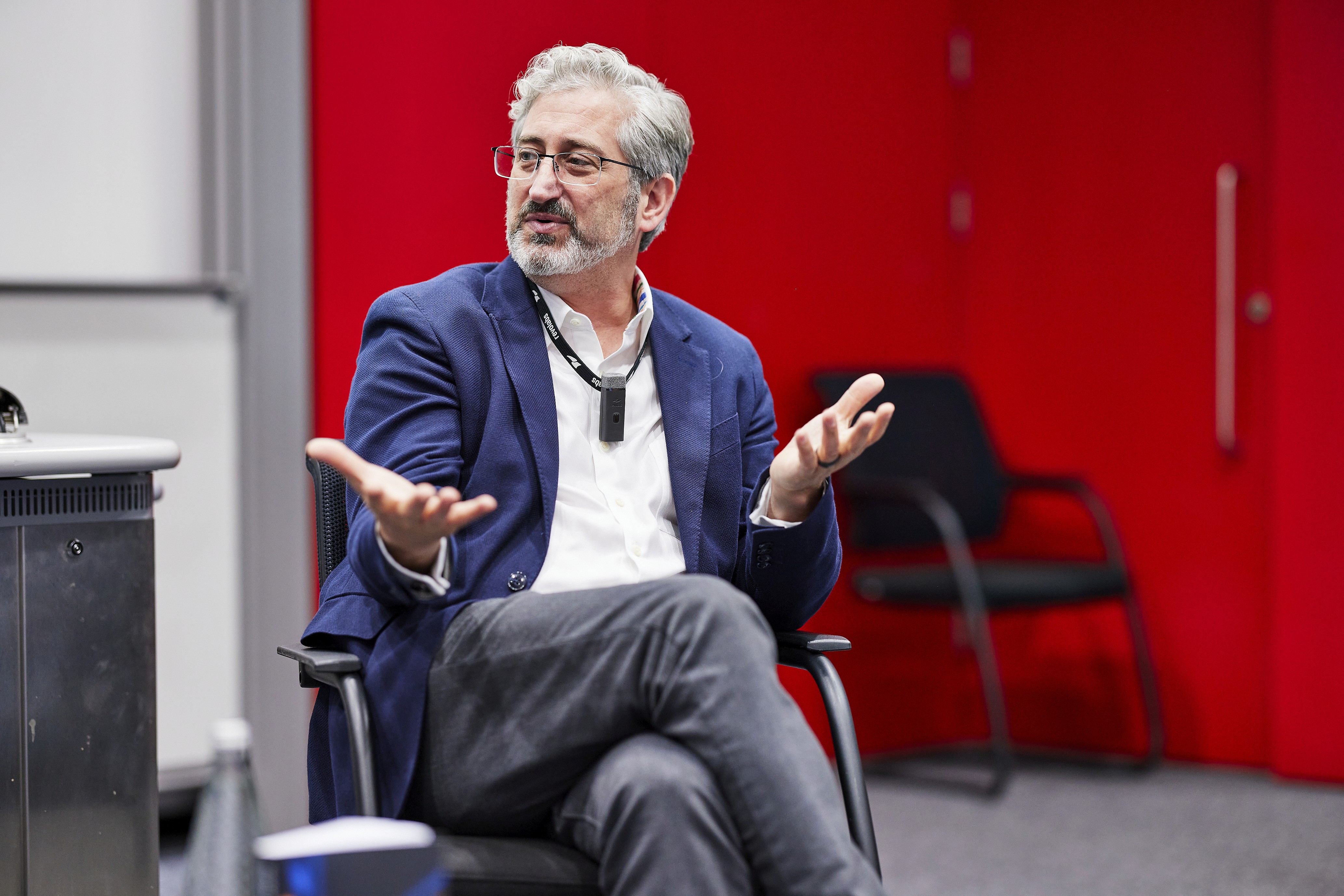
David L. Shrier is a Professor of Practice in AI & Innovation at Imperial College London, a visiting scholar at MIT CSAIL, and the researcher behind a unified theory of Intelligence Capital.
ET
The $80 Trillion Intelligence Shift: Why enterprise AI failures signal the greatest wealth creation in modern history
The $80 Trillion Intelligence Shift: Why enterprise AI failures signal the greatest wealth creation in modern history
The headlines proclaim enterprise AI is failing. They're half right.
The majority of AI implementations are indeed failing—but not because the technology disappoints. They're failing because executives are bolting transformational capability onto obsolete operating models. It's the equivalent of strapping a jet engine to a stagecoach and wondering why you're not breaking the sound barrier.
Meanwhile, a quiet crisis is emerging beneath GDP growth: employment expansion has flatlined at a tenth of historical norms. We're generating wealth without generating work—and most leaders haven't even noticed the implications.
David L. Shrier—Professor of Practice in AI & Innovation at Imperial College London, MIT CSAIL visiting scholar, and architect of a unified theory of Intelligence Capital—argues we're not in an AI revolution. We're in an intelligence phase change that will determine which institutions survive the next decade.
In this strategic briefing, David will reveal:
Why failure rates should be higher: The counterintuitive math behind why 99.97% iteration failure signals you're doing innovation right—and why 95% means you're not thinking big enough
“My job just ghosted me”: How "phantom job loss" is reshaping the fundamental relationship between growth and employment, creating political tinderboxes that could ignite by 2035
Intelligence as appreciating capital: Why AI is the first asset in economic history that grows more valuable with use—and why treating it as a cost-reduction tool leaves 99.99% of value on the table
The committed learning blueprint: How to build systems that don't just optimize existing processes but compound knowledge into exponential competitive moats
The $52-80 trillion incumbent advantage: Why established enterprises—not startups—are positioned to capture the largest wealth creation event since electrification, if they act now
Replace, augment, or collaborate: The strategic framework for determining which work AI should eliminate, enhance, or partner with humans to perform
The brutal truth: Organizations tinkering with ChatGPT plugins and debating AI ethics frameworks are rearranging deck chairs. A small cohort of enterprises is systematically internalizing intelligence, converting external costs to internal assets, and building advantages that will be mathematically insurmountable within eight years.
The window for strategic repositioning is measured in quarters, not years. The next dominant institutions won't be built by early adopters throwing technology at old problems. They'll be built by leaders who understand how to architect their entire enterprise around intelligence as compounding infrastructure.
This is your opportunity to question one of the world's leading authorities on intelligence economics about where organizations are missing the transformation—and what the winners are doing differently.
Join us for a rare community Q&A on participating in the largest value creation event of our lifetime.
The headlines proclaim enterprise AI is failing. They're half right.
The majority of AI implementations are indeed failing—but not because the technology disappoints. They're failing because executives are bolting transformational capability onto obsolete operating models. It's the equivalent of strapping a jet engine to a stagecoach and wondering why you're not breaking the sound barrier.
Meanwhile, a quiet crisis is emerging beneath GDP growth: employment expansion has flatlined at a tenth of historical norms. We're generating wealth without generating work—and most leaders haven't even noticed the implications.
David L. Shrier—Professor of Practice in AI & Innovation at Imperial College London, MIT CSAIL visiting scholar, and architect of a unified theory of Intelligence Capital—argues we're not in an AI revolution. We're in an intelligence phase change that will determine which institutions survive the next decade.
In this strategic briefing, David will reveal:
Why failure rates should be higher: The counterintuitive math behind why 99.97% iteration failure signals you're doing innovation right—and why 95% means you're not thinking big enough
“My job just ghosted me”: How "phantom job loss" is reshaping the fundamental relationship between growth and employment, creating political tinderboxes that could ignite by 2035
Intelligence as appreciating capital: Why AI is the first asset in economic history that grows more valuable with use—and why treating it as a cost-reduction tool leaves 99.99% of value on the table
The committed learning blueprint: How to build systems that don't just optimize existing processes but compound knowledge into exponential competitive moats
The $52-80 trillion incumbent advantage: Why established enterprises—not startups—are positioned to capture the largest wealth creation event since electrification, if they act now
Replace, augment, or collaborate: The strategic framework for determining which work AI should eliminate, enhance, or partner with humans to perform
The brutal truth: Organizations tinkering with ChatGPT plugins and debating AI ethics frameworks are rearranging deck chairs. A small cohort of enterprises is systematically internalizing intelligence, converting external costs to internal assets, and building advantages that will be mathematically insurmountable within eight years.
The window for strategic repositioning is measured in quarters, not years. The next dominant institutions won't be built by early adopters throwing technology at old problems. They'll be built by leaders who understand how to architect their entire enterprise around intelligence as compounding infrastructure.
This is your opportunity to question one of the world's leading authorities on intelligence economics about where organizations are missing the transformation—and what the winners are doing differently.
Join us for a rare community Q&A on participating in the largest value creation event of our lifetime.