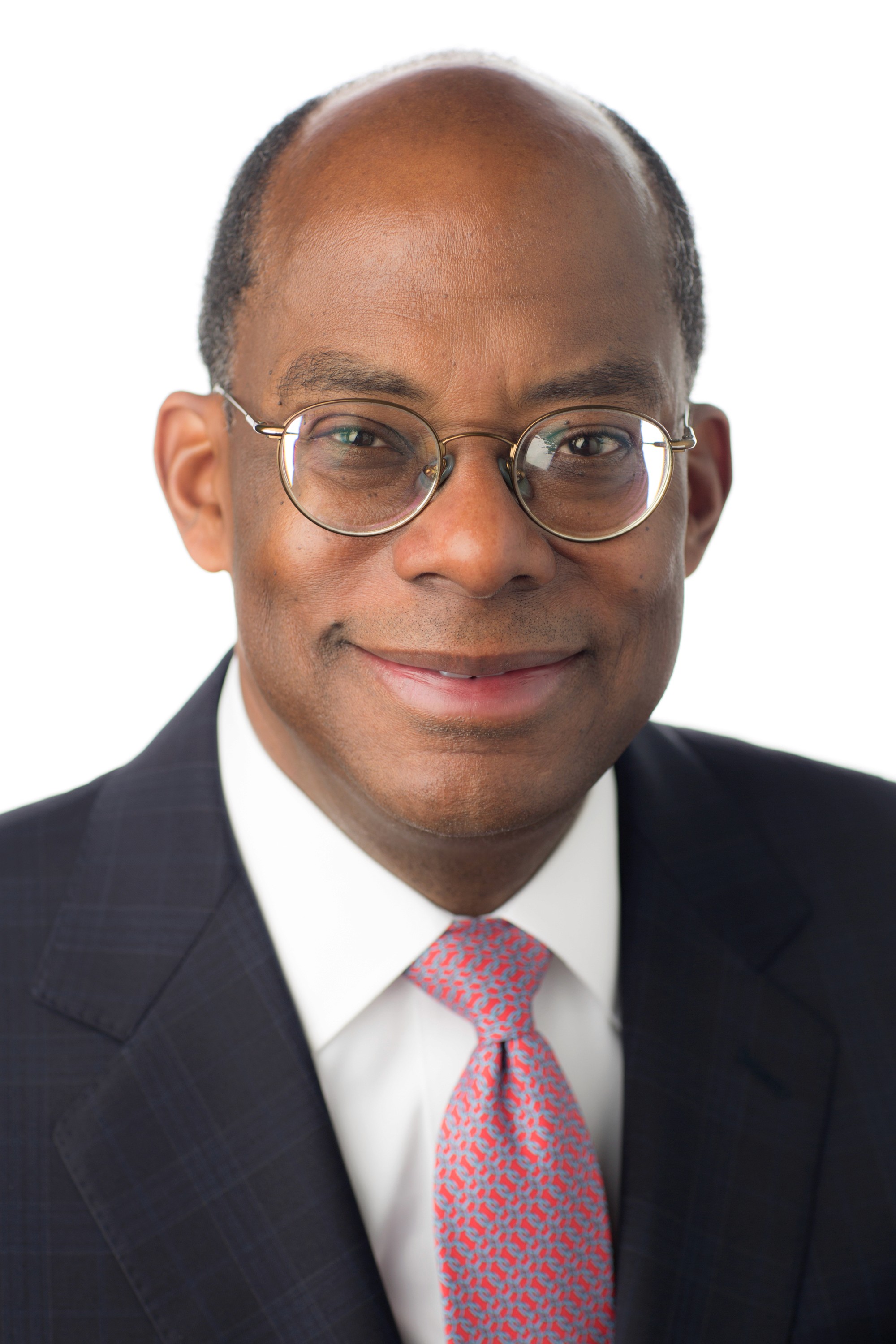
Former Vice Chair of the U.S. Federal Reserve and past President & CEO of TIAA. Distinguished Fellow at the Council on Foreign Relations and current board member at Alphabet and Corning.
ET
2026 Forecast: The AI economy at the tipping point—what a leader who saved the financial system sees coming
2026 Forecast: The AI economy at the tipping point—what a leader who saved the financial system sees coming
What happens when the world's financial systems hang in the balance—and you're the only decision-maker in the room? Roger W. Ferguson Jr., former Vice Chairman of the Federal Reserve, was the only Governor in Washington on September 11, 2001, and led the Fed's response to keep the U.S. financial system functioning during the terrorist attacks. That moment of high-stakes leadership taught him something invaluable: how systems adapt, break, and transform under unprecedented pressure.
Today, we face a different kind of transformation. Global AI infrastructure spending is projected to reach $375 billion in 2025, surging to $500 billion by 2026, fundamentally reshaping how value is created in the global economy. But here's the question that keeps executives, entrepreneurs, and policymakers up at night: Are we witnessing the dawn of a genuine productivity revolution—or are we watching AI investment mask an otherwise fragile economy?
Ferguson brings a rare combination of perspectives to this moment. As Vice Chairman of The Business Council and trustee of The Conference Board, he notes that a majority of CEOs expect major job transformation from AI within the next four to five years. Yet chief economists warn that 82% see current conditions as exceptionally uncertain, with 97% citing trade policy as a key risk, alongside AI's potential for both disruption and growth.
In this community led conversation, we will explore:
A Crisis Leadership Playbook for an AI-Disrupted Economy: What 9/11 taught him about institutional resilience and decision-making under radical uncertainty—and how those lessons apply to navigating today's AI-driven transformation.
The Real Economic Impact of AI: Moving beyond the hype to examine concrete data on productivity gains, labor market disruption, and which predictions are grounded in reality versus speculation. MIT economist Daron Acemoglu estimates AI will boost GDP by just 1% over the next decade, while others predict transformational change—what does the evidence actually show?
Where the Jobs Are Going: Recent data shows tech unemployment among 20- to 30-year-olds has risen nearly 3 percentage points since early 2025, yet new opportunities are emerging. What skills, sectors, and strategies will define success in the AI economy?
The Fed's Dilemma in an AI-Accelerated World: How should monetary policy adapt when AI is simultaneously boosting productivity, concentrating market power, and creating unprecedented uncertainty? What are the inflation risks and growth opportunities ahead?
Building Resilient Organizations: Practical insights on how leaders can prepare their teams and companies for AI-driven change—not through fear, but through strategic adaptation and competitive advantage.
Roger Ferguson combines the hard-won wisdom of crisis leadership, deep economic expertise, and the importance in investment for future growth. This conversation will help us all explore and build strategies around the most consequential economic shift of our time.
What happens when the world's financial systems hang in the balance—and you're the only decision-maker in the room? Roger W. Ferguson Jr., former Vice Chairman of the Federal Reserve, was the only Governor in Washington on September 11, 2001, and led the Fed's response to keep the U.S. financial system functioning during the terrorist attacks. That moment of high-stakes leadership taught him something invaluable: how systems adapt, break, and transform under unprecedented pressure.
Today, we face a different kind of transformation. Global AI infrastructure spending is projected to reach $375 billion in 2025, surging to $500 billion by 2026, fundamentally reshaping how value is created in the global economy. But here's the question that keeps executives, entrepreneurs, and policymakers up at night: Are we witnessing the dawn of a genuine productivity revolution—or are we watching AI investment mask an otherwise fragile economy?
Ferguson brings a rare combination of perspectives to this moment. As Vice Chairman of The Business Council and trustee of The Conference Board, he notes that a majority of CEOs expect major job transformation from AI within the next four to five years. Yet chief economists warn that 82% see current conditions as exceptionally uncertain, with 97% citing trade policy as a key risk, alongside AI's potential for both disruption and growth.
In this community led conversation, we will explore:
A Crisis Leadership Playbook for an AI-Disrupted Economy: What 9/11 taught him about institutional resilience and decision-making under radical uncertainty—and how those lessons apply to navigating today's AI-driven transformation.
The Real Economic Impact of AI: Moving beyond the hype to examine concrete data on productivity gains, labor market disruption, and which predictions are grounded in reality versus speculation. MIT economist Daron Acemoglu estimates AI will boost GDP by just 1% over the next decade, while others predict transformational change—what does the evidence actually show?
Where the Jobs Are Going: Recent data shows tech unemployment among 20- to 30-year-olds has risen nearly 3 percentage points since early 2025, yet new opportunities are emerging. What skills, sectors, and strategies will define success in the AI economy?
The Fed's Dilemma in an AI-Accelerated World: How should monetary policy adapt when AI is simultaneously boosting productivity, concentrating market power, and creating unprecedented uncertainty? What are the inflation risks and growth opportunities ahead?
Building Resilient Organizations: Practical insights on how leaders can prepare their teams and companies for AI-driven change—not through fear, but through strategic adaptation and competitive advantage.
Roger Ferguson combines the hard-won wisdom of crisis leadership, deep economic expertise, and the importance in investment for future growth. This conversation will help us all explore and build strategies around the most consequential economic shift of our time.